
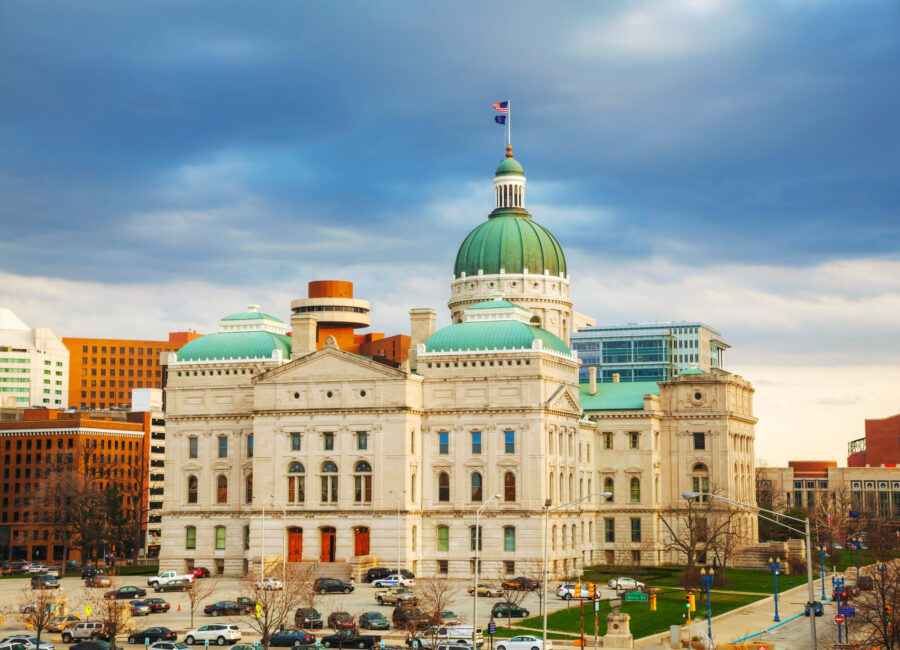
Indiana state capitol building in Indianapolis
2019 Legislative Priorities

A simple block with an image and text overlay.

2019 Priority Issues

Early Childhood Education:

GOAL: Ensure children entering primary (K-12) education are academically, socially and emotionally prepared for success through high-quality, publicly-funded Pre-K programs; increased public investments should focus on those in financial need and support statewide access, while protecting funding and service levels in high-demand, high-capacity ‘pilot’ counties. Further, enact mandatory, fully-funded, full-day kindergarten by age 5 to create a consistent, quality early education pathway

OUTCOME: HB1628 passed, expanding ‘On My Way’ pre-K to all Indiana counties while maintaining current funding levels ($22M annually) and protecting service levels in existing pilot counties (like Marion).  The bill also expands eligibility for households led by grandparents, sibling guardians or others who may meet income guidelines but not work requirements. 

It represents another foundational step towards accessible and affordable quality early learning programs that will pay off for our future workforce and economy.

Diversity:

GOAL: Reinforce and enhance Indiana’s brand as a welcoming and diverse state by:
Enacting “bias crime” penalties for criminal offenses where it can be proven that the victim or target is intentionally selected because of personal characteristics enumerated by law

  • Updating the state’s current anti-discrimination law to prohibit discrimination on the basis of sexual orientation and gender identity in housing, employment and public accommodations
  • Restoring the eligibility for in-state tuition and financial aid to state colleges and universities for foreign born students who have matriculated through the Indiana K-12 system

OUTCOME: SB198 was passed and sent to the Governor’s desk for approval. This action marked the most substantive movement on bias crimes legislation in the last 20 years. We now have a law on the books that hopefully removes us from the dwindling list of states that turn a blind eye to bias crimes.

Regardless of this outcome, bias crimes will remain a top Indy Chamber priority as we continue the push to strengthen this law so no citizens are left behind or denied equal protection. We still have work to do in continuing to build a competitive business climate and protect all Hoosiers at risk of being targeted by bigotry and intolerance, but this legislative action in 2019 was a major step forward.

Interlocal/Regional Investments:

GOAL: Support a statewide approach that encourages interlocal collaboration, allows catalytic investments in regional priorities, and creates a fiscal framework to fund essential services such as public safety and infrastructure

OUTCOME: The Regional Cities Development Fund was phased out of the budget, with responsibilities transferred to the Business Promotion & Innovation Fund, while SB563 created a new redevelopment tax credit to encourage reinvestment and new urban development.

Other reforms of the local/regional revenue structure will earn the spotlight during interim study committees: SB565 includes a study of ‘regional investment hubs’ allowing localities and regional development authorities to build ‘own source’ revenue capacity to pursue ongoing capital needs and transformative economic development projects. The distribution of local revenues based on residence and employment and potential state-county revenue sharing are also headed for the summer study agenda. 

The Indy Chamber will also be engaged in next steps with the Indianapolis MPO and Regional Development Authority (RDA) as they explore a new governance structure.

Brownfields:

GOAL: Accelerate community reinvestment and accessible employment opportunities in and around brownfield sites, driving economic development and maximizing property values by: 

  • Restoring funding to Indiana Finance Authority’s Brownfield Grant Program, adding IFA staff capacity to administer the program, reduce wait times and extend technical assistance efforts;
  • Expanding grant and loan resources for “Phase I” and “Phase II” environmental site assessments for former brownfields;
  • Creating tax incentives based on employment on former brownfield sites
  • Expanding flexibility of a redevelopment commission to sell or transfer a title to real property which is undeveloped, underdeveloped, or considered blighted due to the real or perceived threat of environmental contamination for private development

OUTCOME: The budget (HB1001) increased funding by $1 million per year for the Excess Liability Fund, a fund used to fund brownfield remediation program under the Indiana Finance Authority (IFA) and leverage federal funding.  This increased funding marks a modest step in a positive direction. SB563 created a redevelopment tax credit to give state and local economic development officials another tool for attracting investment to chronically-vacant properties, including blighted brownfield sites (which earned some scoring preference for identifying qualified redevelopment sites).

Healthy Workforce:

GOAL: Support a comprehensive approach to increase the health, wellbeing and productivity of Indiana’s current and future workforce through supporting policies such as:

  • Increasing Indiana’s current cigarette tax by two dollars per pack:
    • Revenue resulting from the cigarette tax increase should be used to address Indiana’s public health challenges including physical, mental health and addiction
  • Raising the statewide legal age to purchase tobacco products from 18 to 21:
    • At a minimum, the state should remove restrictions on local governments from enacting ordinances to raise the age to 21
  • Repealing preferential treatment for smokers in the workplace (“Smokers’ Bill of Rights”)


OUTCOME: Despite overwhelming constituent support, there was no movement on cigarette taxes, as lawmakers deferred the opportunity to gain $350M in revenue (with a $2-per-pack increase) while building a healthier, more productive workforce, even as the Medicaid budget continues to outgrow projections as one indicator of Indiana’s lagging public health.

Additional Reading 

Richard M. Fairbanks Report  

Raise It For Health

Introduction

The 2019 session of the Indiana General Assembly featured important – and spirited – debates about the future of our state and our region: Would we stand up against hate and welcome diverse talent by enacting bias crimes legislation?  What priorities would guide the development of the next biennial budget? From early learning and K-12 to higher education and workforce development programs, would legislators make crucial investments in human capital?

Five months later, we know the answers – for now.  The theme of our legislative agenda, “Strong Foundations. High Aspirations.,” is a reasonable summary of this session: In many ways, we strengthened our business climate basics.  The areas where we fell short give us a roadmap to aim higher and keep working.

Local Government and Fiscal Policy

Homelessness & Panhandling

Service Enhancement:
GOAL: Support increased levels of service to homeless populations including a comprehensive approach to establish low-barrier shelters and wraparound service treatment models. Allow funds from Medicaid 1115 waiver to be used for homelessness intervention and prevention services

Local Government Finance

Home Rule:
GOAL: Allow local government greater flexibility over their own structural and fiscal matters to address the needs of their individual communities

SB148 Zoning and Housing Matters PASSED *Not on our agenda but watched*

  • Provides that any regulation of landlord-tenant relationships must be set at the state-level; overrules local ordinances in Indianapolis, Bloomington, South Bend, and other communities
  • Makes it illegal to retaliate against a renter who reports unlivable conditions (critics say this ordinance lacks teeth, is unenforceable, and substantially less robust than Indianapolis’ ordinance)
  • Requires mobile home community operator to give owners at least 180 days’ notice before closing community
  • Amends statute concerning manufactured homes located outside of mobile home community

Township Finances:
GOAL: Require township funds that exceed 150% of operating expenses to be spent on infrastructure projects within the township or credited to the taxpayer

Government Modernization

Redistricting Reform:
GOAL: Support non-partisan redistricting reform that increases and encourages competition of ideas, decreases polarization in legislative and congressional districts, accurately reflects historic trends in statewide elections and maintains communities of interest and adheres to local political boundaries

UniGov:
GOAL: Seek greater efficiencies in municipal service delivery and finance in Marion County by building on the principles of unified government, including county-wide consolidation of fire departments

Statewide:
GOAL: Continue efforts to streamline overlapping government functions through statewide implementation of recommendations made by the Indiana Commission on Local Government Reform to increase accountability, transparency and effectiveness of local governments

Government Innovation:
GOAL: Continue support of the state’s Management & Performance Hub to foster a more transparent, innovative state government, and encourage local governments to create Offices of Innovation to drive policies that similarly inspire open data, transparency, and efficiencies that can result in greater economic activity and workforce development

Healthcare Data:
GOAL: Support strategies to improve availability, quality, and verifiability of data on the price, quality, and utilization of healthcare services that can be easily accessed and understood by patients, healthcare providers and employers

Economic Growth

State and Local Economic Development


Tax Increment Financing:
GOAL: Maximize the ability of local government units to respond to redevelopment and economic development opportunities through utilization of Tax Increment Financing (TIF) districts

  • Transparency: Establish a schedule of performance reports to local governing bodies and encourage the establishment of public online resources for tracking TIF performance metrics, funded by TIF revenue

Local Incentives:
GOAL: Secure and maintain flexibility of local incentives for economic and community development efforts to encourage new growth and redevelopment of existing resources

  • Certified Tech Parks: Increase the Certified Technology Park (CTP) tax capture allowance from the current $5 million cap to allow high performing CTPs to increase public-private investment in the CTP and surrounding areas

OUTCOME: SB264 Certified Technology Parks (DIED)

  • Would have amended statute allowing certified tech parks to capture additional incremental income tax once it has reached its limit on deposits
    • Would have increased annual additional deposit from $100,000 to $500,000
    • Capped total additional amount that may be captured at $2M
    • Required certified technology parks to meet reporting and performance requirements

State Incentives:
GOAL: Maintain Indiana’s economic competitiveness through the preservation and responsible use of existing state tax incentives, placing emphasis on skills enhancement and workforce training to attract investment from diverse industry sectors

  • Increase funding the state Skills Enhancement Fund to assist companies in addressing 21st Century skills gap.

OUTCOME: HB1112 Skills Enhancement Fund Grants (PASSED)

  • States that an increase in wages from participating employee/group of employees negotiated by agreement (regardless of timing) qualifies as eligible for a grant from the Skills Enhancement Fund

SB262 Film and Media Production Incentives (DIED) *Not on our agenda but watched*

  • Statewide incentive plan to attract more media production, modeled after Ohio, Kentucky, and Tennessee
  • Would have authorized newly formed Indiana Destination Development Corporation to create film and media incentive program
  • Would have required report to interim study committee on fiscal policy in other states on film/media production

Entrepreneurship and Innovation Investments:
GOAL: Support policies that can improve the State’s capital environment and nurture innovative activity through:

  • Maintain permanence of the state’s Research and Development, Hoosier Business Investment, and Venture Capital Investment tax credit programs.
  • Increase funding for the 21st Century Research and Technology Fund to support industry driven initiatives.
  • Maximize immediate value of state EDGE and VCI tax credit by allowing recipients to transfer credits for cash value
  • Enhancing flexibility for public investment in venture capital funds that invest in Indiana companies
  • Enhancing funding to support more university-sponsored grant programs and seed funding for applied research and commercialization

Advanced Telecommunications:
GOAL: Support efforts by telecommunications providers to transition their networks from old legacy technology to an advanced all-IP, all-mobile, 5G supportive, all-cloud infrastructure


Community Redevelopment & Investment


Brownfields:
GOAL: Accelerate community reinvestment and accessible employment opportunities in and around brownfield sites, driving economic development and maximizing property values by:

  • Restoring funding to Indiana Finance Authority’s Brownfield Grant Program, adding IFA staff capacity to administer the program, reduce wait times and extend technical assistance efforts
  • Expanding grant and loan resources for “Phase I” and “Phase II” environmental site assessments for former brownfields
  • Creating tax incentives based on employment on former brownfield sites
  • Expanding flexibility of a redevelopment commission to sell or transfer a title to real property which is undeveloped, underdeveloped, or considered blighted due to the real or perceived threat of environmental contamination for private development

Stellar Communities:
GOAL: Support continued investment and rural communities and small towns across Indiana by strengthening and expanding the Indiana Stellar Communities program, emphasizing increased technical assistance and capacity-building towards brownfield remediation and redevelopment

Historic Rehabilitation:
GOAL:  Increase state funding and incentives to encourage redevelopment and investment in aging commercial, industrial and residential properties

  • Restore the Historic Rehabilitation Tax Credit program for large, catalytic projects that leverage available federal funding and lead to job growth and higher wages
  • Maximize immediate value of Historical Rehabilitation Tax Credit by allowing recipients to transfer credits for cash value
  • Increase funding for the Historic Rehabilitation grant program for smaller-scale projects of up to $100,000 or 50% of project cost that drive reinvestment in local cultural, community, and tourism development efforts

Shovel Ready Redevelopment:
GOAL: Support shovel ready community redevelopment efforts through the creation of a statewide grant program to fund the demolition of blighted commercial properties

Revitalization Grants and Revolving Loan Fund:
GOAL: Allow local governments the ability to make grants and loans to private enterprise for the creation of jobs or otherwise stimulate economic activity

Food Access & Insecurity:
GOAL: Support innovative efforts to increase access to healthy food options and strategies to improve food security to support the health of Indiana residents and workforce. Empower and enable innovative and proven food distribution models, alternative payment processes, and data collection on food access and insecurity

Diversity

GOAL: Reinforce and enhance Indiana’s brand as a welcoming and diverse state by:

  • Strengthening “bias crime” penalties for criminal offenses where it can be proven that the victim or target is intentionally selected because of personal characteristics enumerated by law
  • Updating the state’s current anti-discrimination law to prohibit discrimination on the basis of sexual orientation and gender identity in housing, employment, and public accommodations
  • Encouraging federal leadership on comprehensive immigration reform. Restore the eligibility for in-state tuition and financial aid to state colleges and universities for foreign born students who have matriculated through the Indiana K-12 system


Transportation, Infrastructure & Environment

Local Roads and Streets:
GOAL: Ensure adequate funding for local roads and streets, while maintaining equitable funding for urban and suburban areas by accurately accounting for lane miles in the infrastructure funding formula; and further:

  • Financing and Delivery: Provide maximum flexibility to local governments in the financing, design and construction of local transportation infrastructure, including the use of Public-Private Partnerships and Design-Build

Hoosier State Line:
GOAL: Reinstate state support to continue operations and enhance service of the Hoosier State Line to better facilitate connectivity and economic opportunity between Indianapolis, Northwest Indiana, and Chicago

Complete Streets:
GOAL: Pursue state transportation policies that encourage transportation planners and engineers to plan, design, operate and maintain the state’s road and street infrastructure that facilitates public use, physical activity, and support public health

Greenways:
GOAL: Support the creation of a statewide loan or grant fund to build out of greenways and bike lanes for local communities

Mass Transit:
GOAL: Restore a dedicated funding stream for the Public Mass Transportation Fund (PMTF) to account for increased participation and demand of transit agencies throughout the state

  • Incentives: Create state employer incentives for employee benefits for alternative modes of transportation, transit packages, workplace bike infrastructure or other modes of transportation that encourage healthier workforce

Shared & Personal Mobility:
GOAL: Capitalize on rapid advances in personal mobility and transportation by making new mobility options safe and accessible for Hoosiers, and positioning Indiana as a center of innovation for mobility solutions

  • Autonomous Vehicles: Advocate for regulatory changes to promote the development, testing and deployment of autonomous vehicles in Indiana
  • Transparent Regulatory Framework: Beyond autonomous vehicles, develop a clear and predictable regulatory framework that applies to other mobility options, to avoid confusion and delays in integrating new products and services into our transportation system
  • Emphasize equitable access to new mobility options: Work to eliminate barriers to individuals and communities taking advantage of mobility options, so personal mobility can also be a catalyst for upward mobility
  • Create a truly comprehensive transportation strategy: Acknowledging that no single agency or organization can oversee the complex transportation system, bring together partners (state and local, public and private) to develop long-term, data-driven strategies that incorporate new and innovative mobility options and focus on critical transportation challenges
  • Safety first: Evaluate traffic rules, street construction/configuration, and other modal regulations to ensure mobility options work together safely for pedestrians, riders, drivers, and other users

Water:
GOAL: Support the creation of a statewide coordinating body to ensure sustained economic opportunity through responsible management of water resources

Energy Efficiency:
GOAL: Secure state incentives for business and local government investments in energy-efficient commercial and industrial rehabilitation and fleet management

Legislative Priorities Index

Click a year to review past and current legislative priorities.