As our partners at PATTERN like to say, creativity is everywhere. Each and every industry is shaped by it, and our region’s legacy exists because of it. At the same time, building infrastructure, funding and support systems for the individuals and organizations fueling the creative economy will be essential to the next chapter for Indiana.
The Indy Chamber is proud to sponsor PATTERN’s 4th Annual Indiana Creative Economy Summit, convening statewide leaders and community members to dive deeper into these conversations. Over the course of two days of programming in September, attendees forged new connections, heard from speakers innovating in their respective fields, and mined each other’s successes for future inspiration. Though the lasting impact of the conversations started at the Summit will bear fruit for years to come across the region and state, we summarized four of our primary takeaways.
1. Bold bets will build an innovative future
The Summit kicked off on a high note with an address from keynote speaker Carol Coletta, the current Public Innovation Fellow at the Johns Hopkins University Bloomberg Center for Public Innovation. Coletta posed a key question for the Summit audience: What should Indiana build?
To answer, Coletta pointed to her own research and experience to suggest that we lean into the creativity of the everyday to think boldly about the innovation our shared future can hold. Citing unplanned experiences with strangers facilitated by urban design and downtown living, she posited that Indiana can seize the opportunity to build cities and regions that invite spontaneity and creativity upon a foundation of trust.
By investing in community and facilitating spaces for creative connection, the Indy region can continue to lead as an incubator for innovation. This means thinking boldly for future developments and projects that will shape the next era of the region – not simply relying upon the successes of the past.
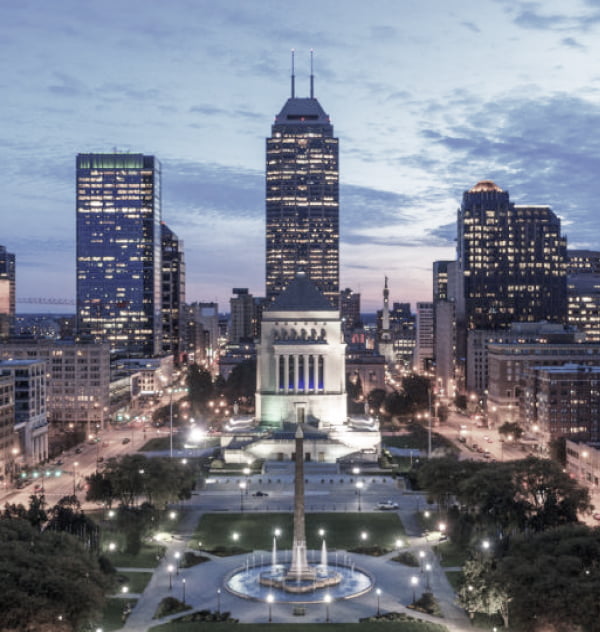
Creating these spaces for our city is front of mind at the Chamber, as we recently launched a coalition to establish the Downtown West Innovation District in Indianapolis. If you missed your copy of the Indianapolis Business Journal’s Downtown Issue, read up on our shared vision for a downtown that utilizes Indy’s creativity to best showcase our assets.
When our spaces encourage the civic engagement and community building we want to see in our region, they will bear fruit by establishing new ideas that will continue to push us forward.
2. Policy infrastructure protects industry progress
The Chamber’s own Taylor Hughes, Chief Strategy Officer and Chief of Staff, joined peers in economic development for a panel session diving into Indiana’s policy voice advocating for the creative economy. As the movement to organize around creative industries builds, it will become necessary to coordinate policy efforts to bolster the billions in economic activity generated by our state’s creatives. What does shaping that voice sound like? We have a couple of ideas.
- Making policy infrastructure more visible for the entrepreneurs working in the creative economy
- Providing value and support to Chamber members, establishing the resources they need to fuel their creative work
- Telling the stories of our community, from members to creatives who establish the print of our region’s fabric
- Opening channels for feedback, to ensure missing voices from the conversation are heard
- Meet creatives where they are, sharing resources and building awareness on existing entities who exist as advocates
- Encouraging an ambitious mentality, bringing Indy’s hometown pride into legislative conversations to justify support
- Building staying power, beyond a flash-in-the-pan moment to cultivating a legacy for our region
One key action item from this policy session pointed to a new opportunity for creatives to build a coalition: the Creative Economy Leadership Alliance (CELA). Formed by PATTERN in 2026, CELA provides a chance for creatives to build relationships and share their experience in a growing trade association forum. As the unified voice for Indiana’s creative industries, CELA is working to define and measure the creative economy, advocate for smart policy and investment, and give creative industries the same footing as Indiana’s other priority sectors.
Membership is now open for applications on the CELA website, with tailored plans for individuals, enterprises, and businesses. Getting involved with the work CELA is advancing as a member is one way for creatives to continue the conversations started at the Summit.
3. Learn from the lessons of peer cities and institutions
One of the Indy region’s greatest assets is our position in the Crossroads of America, deeply connected to peer cities across the country. On Day 2 of this year’s Summit, attendees heard from our Southern neighbors to learn from Nashville’s own creative economy boom. Jill McMillan Palm, Executive Director of the Arts and Business Council of Greater Nashville, and Joni Williams, Assistant Director of Strategic Integration and Program Development with the City of Nashville Planning Department, led a conversation spanning city planning, economic development, and preserving local voices.
Nashville’s acceleration provides a roadmap with several lessons as we strategize around Indy’s own, but maybe most crucial is the advice Palm and Williams provided around slowing down. Taking stock of our region’s history, legacy, and what we’ve already built will be key to launching sustainable development for Indy’s future.
Considering the power of pace means bringing our community into conversations determining the region’s next steps. Influxes of external opportunities can leave local residents behind, so it becomes our shared responsibility to ensure we honor Indy’s current ecosystem. By strategizing around available talent and existing communities, we all have the opportunity to build something sustainable and community-anchored.
Palm shared a meaningful lesson from Nashville’s tourism boom: growth can’t negate history or replace it; it must be inclusive and bring people together as we rise. Connecting each of the elements that serve our community, from local nonprofit organizations to investment funds, will sustain the innovation we all need to succeed.
Indy can’t afford to assume the ecosystem of creativity we currently maintain will stay here through periods of accelerated growth – this moment requires intention. As we share priorities and convene leading voices across every sector of our community, the action we take will be stronger for it.
4. Creativity is everywhere – invest in it across the board
In the opening convening for this year’s Summit, Indy Economic Development President Josh Richardson emphasized on a crucial concept: the creative economy isn’t separate from economic development, it has become part of how Indiana competes. Focusing on creativity across each of our competitive industries is a prerequisite for growth, and state-wide investment proves this necessity.
Joined by Miah Michaelson, Executive Director of the Indiana Arts Commission (IAC), READi Program Director Jim Rawlinson shared insights and lessons from the IAC’s latest round of READi grant funding. Channeling $62.3 million into 49 statewide projects, the READi program invests in quality of place and capacity building for regions to boost creativity, arts, and culture in their own communities.
One of the most prominent insights Michaelson and Rawlinson shared from the most recent funding round was the necessity of collaboration. Regional grant applications which emphasized community buy-in, established relationships to strengthen strategic planning, and shared knowledge of the arts and culture sector were most likely to receive funding. Years of relationship building preceded the million-dollar grants, establishing a firm foundation for further investment.
These partnerships will need to reach across public and private sectors, bringing diverse voices to the table to discuss the next moonshot opportunity for our creative economy. Through convening expertise across industries and tracking the impact of existing investment, we can build a collective case for the next era of growth.
This year’s Indiana Creative Economy Summit was energizing and inspirational, driving each attendee to consider how they can contribute to the state’s creative economy. Indiana has the opportunity to lead the country in partnerships, investment and sustainable collaborations that platform our creative industries. Now the call to action lies in our hands to carry this work forward.
Take that first step by joining the conversation with PATTERN, and tune in to their newsletter.